A First Look Around Before the First Performance
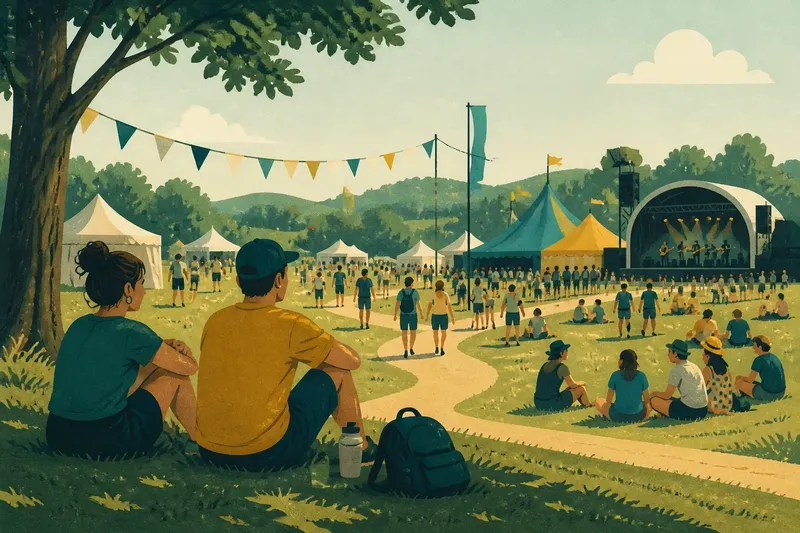
A first look around a festival site helps you spot landmarks, choose a useful starting point, and settle in without losing the feel of the day.
The common mistake at a festival is to head straight for the first stage and treat the rest of the site as somewhere to work out later. That can leave you searching for water, toilets, or the exit when you would rather be listening. A brief first look around gives you a mental map and a calm place to begin.
This festival site orientation is not a full tour or an attempt to memorise every path. It is a way to notice a few reliable landmarks, understand how the main areas connect, and choose a starting point before you settle into the programme.
What should you notice on a first look around a festival site?
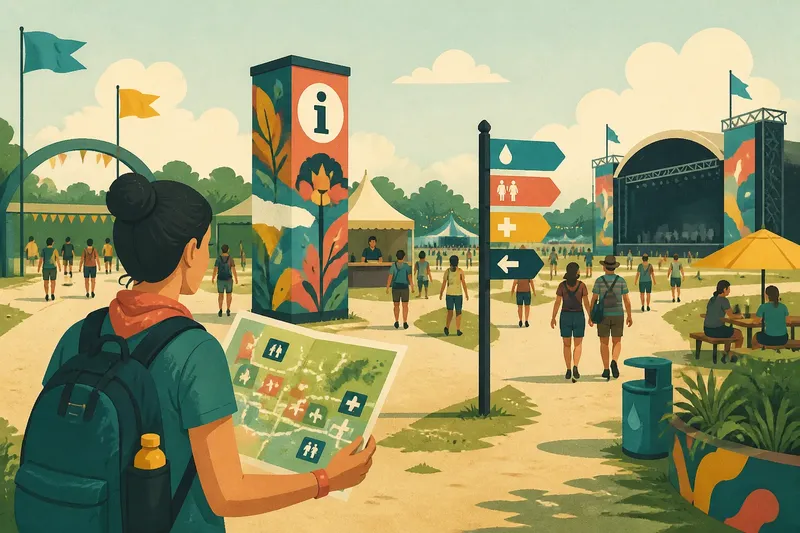
- Begin at the entrance and identify a landmark. Pause just inside the site and look for a feature that is easy to recognise from different directions: a tall sign, a distinctive building, a prominent art installation, or the main information point. A useful landmark is visible, specific, and unlikely to be confused with a row of similar tents. Later, it can help you orient yourself without reopening a map every time.
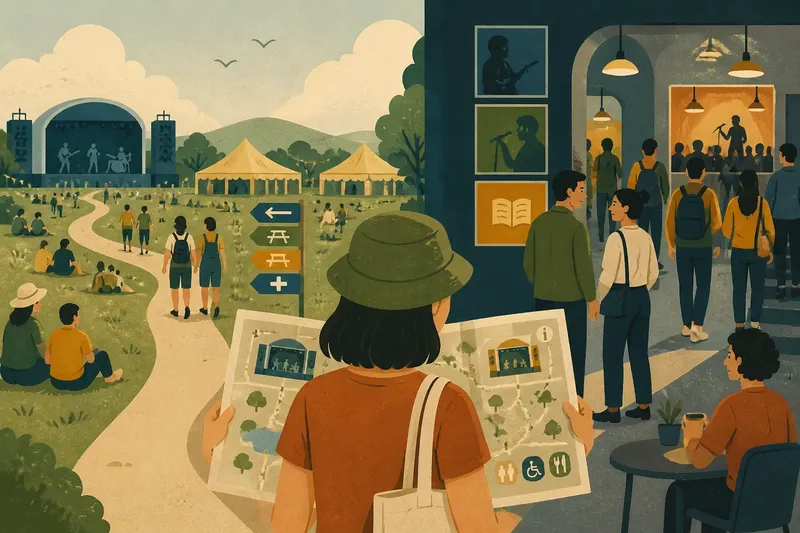
- Find the information point and check the site map. Look for the printed map, a posted layout, or an official map on your phone. Notice the names of the stages and the broad arrangement of the site rather than trying to memorise every stall. If the map marks accessible routes, quiet areas, first aid, or other services, take a moment to locate them. Site layouts and available services vary, so use the event’s current information and any posted directions.
- Trace one simple route between two useful places. Choose a route from the entrance to a practical destination, such as the nearest water point or toilets, and follow it at an easy pace. Pay attention to obvious turns and what the path passes: a food court, a sign, a fence line, or a change in ground surface. A route you have walked once is easier to recognise than a string of instructions remembered from a screen.
- Notice how the stages relate to one another. Check which stages are near each other and which require a longer walk. You do not need to calculate travel times or plan a route for every set. The purpose is simply to understand whether the site has one central hub, several separate areas, or a route that funnels people through the same paths.
- Choose a starting point that suits your arrival. Pick a place where you can pause, get your bearings, or meet someone before heading to a performance. It might be a marked seating area, a food space with room to stand aside, or a visible landmark near the route you intend to take. Choose somewhere that does not block a walkway or entrance. A good starting point is easy to describe and gives you a clear next direction.
- Check the path you expect to use first. Look at the surface, signs, and general flow of people on the route to your first performance. If a path is crowded or difficult to distinguish, notice a nearby alternative shown on the map. There is no need to force a shortcut: a clearly marked route is usually simpler to remember, especially when you are carrying belongings or moving with friends.
How can you orient yourself without turning the visit into a tour?
Keep the first look selective. Choose a few anchors that answer practical questions: where you entered, where the main information is, how to reach a useful service, and which direction leads to your first stage. Trying to inspect every corner can take attention away from the atmosphere and leave you with details you will not use.
Say you arrive with a friend and want to catch a set near the far side of the grounds. You spot a bright mural by the information point, walk from there to the stage entrance, and notice a signed path passing the food area. If you later lose sight of your friend, you can suggest meeting by the mural and describe the route you have already seen. The expected result is a clearer meeting plan, not a promise that the area will remain uncrowded.
What if the map and the site feel confusing?
Start with signs and stable landmarks rather than small details. Compare the names on the map with signs you can see, and look for the nearest staffed information point if the layout still does not make sense. If a path appears closed or people are being directed elsewhere, follow the on-site instructions instead of relying on a route you planned earlier.
It is not worth the effort to memorise every stall, shortcut, or stage entrance before the music begins. Those details can change in usefulness as the site fills, and a handful of clear reference points is easier to keep in mind. Use a saved map as a backup, but do not let checking it become the whole visit.
When should you stop looking around and settle in?
Once you can identify your entrance landmark, one practical service, and the direction of your first performance, the orientation has done its job. If you still have a question, ask it before entering a dense crowd or joining a queue. Then put the map away and choose a comfortable place to wait or listen.
A first look around a festival site works best when it gives you confidence without setting the day in stone. Keep one meeting point in mind, remember the route you chose, and allow the rest of the grounds to become familiar naturally. That small pause at the start can make it easier to notice what is happening around you once the performances begin.