The Packing List That Turns Into a Burden
A festival packing list can keep essentials close without weighing down your day. Sort each item by likely use, access, and the cost of carrying it.
The common mistake with a festival packing list is treating every possible inconvenience as a reason to pack another item. The result can be a bag that is tiring to carry, awkward in a crowd, and full of things that never leave their pockets.
Better preparation is not simply bringing less. It is choosing what suits the event, the site, and your plans, then making sure the items you do bring are easy to reach and sensible to carry.
Why does a festival packing list get too heavy?
A list grows when it is built around imagined problems rather than the day you expect to have. A spare layer, a second charging option, a backup snack, and several “just in case” items may each sound reasonable alone. Together, they can turn a small bag into a constant distraction.
Some additions also duplicate the same function. A rain jacket, poncho, and umbrella all address wet weather, but carrying all three may not make sense. A compact venue may have different entry rules from an open field, and an event’s permitted-bag policy may rule out an otherwise useful choice.
Before adding anything, ask what specific situation it addresses and whether another item already covers that need. If the answer is vague, the item may be serving anxiety more than the day.
How should I sort a festival packing list?
Sort items by how likely you are to use them, how quickly you would need them, and how burdensome they are to carry. This keeps the list tied to decisions instead of habit.
- Likely and useful: Items you expect to use, such as your ticket or phone. Keep them easy to reach.
- Useful in a specific condition: A light layer if the evening may feel cooler, or rain protection if the forecast points that way. Choose one option that fits the likely condition.
- Useful only if plans change: Items tied to a possible detour or extended stay. Add these only if the change is plausible and the item is easy to carry.
- Rarely needed or duplicated: Extra versions of something already covered, or objects without a clear purpose. Leave them out unless the event or your own needs call for them.
Then consider access. A phone needed for a ticket should not be buried below a jacket, while an item intended for later can sit deeper in the bag. Packing order should follow the moments when you will reach for each thing.
What belongs on a festival packing list?
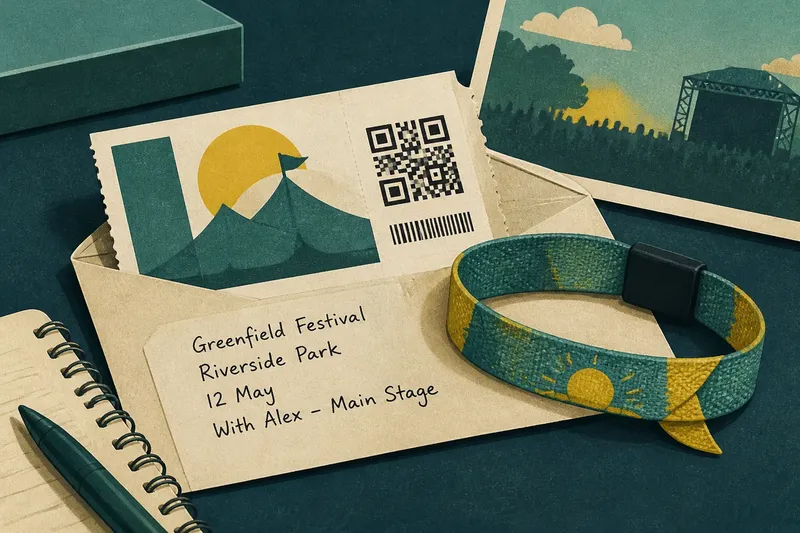
Start with what lets you enter and manage the day: your ticket or pass, a phone if you rely on it, and a way to carry any essential payment or identification. Keep these together in a secure, reachable place. If the event issues a wristband or uses a specific ticketing method, plan around that process rather than packing an unnecessary backup.
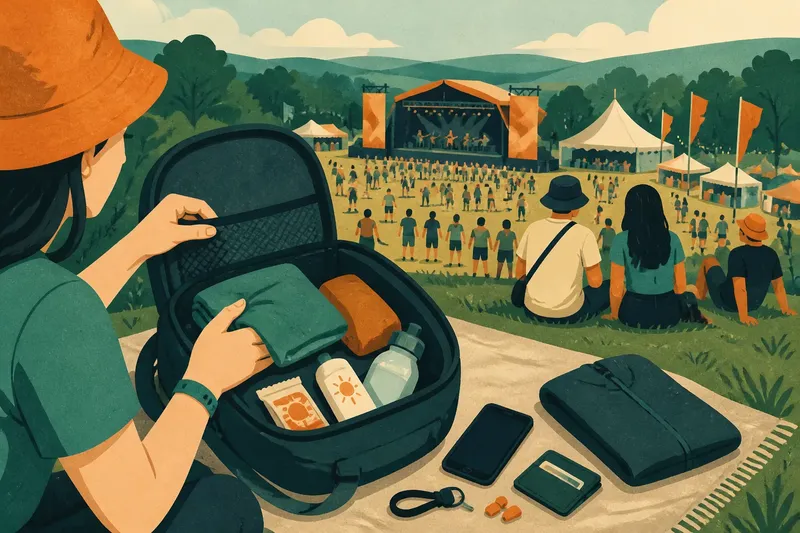
Next, consider comfort items that match your setting. Sunscreen may suit an exposed outdoor site; a warm layer may matter for an evening performance; a reusable water bottle may be useful where the venue allows it and refill points are available. A small snack can be practical if outside food is permitted and you expect a long stretch between meals.
Personal needs can change the list. Medication, hearing protection, or supplies for a particular health or access need may be essential even if another attendee would leave them at home. Keep such items in their original packaging where appropriate, and follow the product directions and any relevant venue requirements.
For bags, favor a size and style you can carry comfortably through the whole visit. A crossbody bag or small backpack may keep hands free, but the best choice depends on the event’s bag rules and your own comfort. Avoid adding a second container just because the first one is already full; treat fullness as a signal to reconsider the contents.
How do I decide whether a “just in case” item is worth carrying?
Give each optional item a clear condition for use. If you cannot name a likely moment when you would reach for it, or an alternative already covers the same need, it probably does not earn its space.
Say you expect to attend an outdoor event with a forecast that may bring a brief shower. You choose a packable rain jacket, leave an umbrella and spare poncho at home, and place the jacket near the top of your bag. If rain arrives, you can put it on without sorting through everything; if the sky stays clear, you have carried one compact option rather than a pile of backups.
That decision is not a rule to choose the lightest possible item. A small object can still be unnecessary, while an item with more bulk may be important for your health, comfort, or access. The point is to connect each addition to a real need and make its carrying cost visible.
What should I check before packing?
Check the event’s current entry guidance before you settle the list. Bag dimensions, prohibited items, food and drink rules, and refill arrangements can vary by venue. Where a decision depends on the event’s rules or a product label, follow those directions rather than relying on a general packing suggestion.
Also check the site map and the kind of day you have planned. An event spread across outdoor grounds may call for different footwear and weather protection than a short visit to a compact indoor venue. Consider how long you expect to be on your feet, whether you will leave the site during the day, and what facilities the venue says it provides.
Make a final pass over the actual bag, not just the written list. Put everything in, close it, and carry it around at home for a little while. If it shifts, digs into your shoulder, or makes it hard to reach essentials, remove or rearrange items before the trip.
What questions do festival-goers ask about packing?
Should I bring a portable charger?
Bring one if your phone is important for entry, meeting companions, or getting home and you expect its battery to be a concern. Check whether the event allows it, and skip extra cables or backup batteries that do not match the device you will use.
Do I need a change of clothes?
Pack a change only if your plans make it useful, such as getting wet or continuing to another activity afterward. For a single-day visit with no planned change, a spare outfit can take up room without serving a clear purpose.
Is a larger bag better for a long festival day?
Not necessarily: extra capacity makes it easier to carry items you may not need. Choose a bag that fits the essentials you have identified, sits comfortably, and meets the venue’s entry rules.
What should I keep within easy reach?
Keep the items you will need at entry or during a brief pause accessible, especially your ticket and phone if you use them. Store less urgent items where they will not obstruct those essentials, and avoid opening every pocket in a crowded area.
What is not worth the effort?
It is rarely useful to build a separate backup for every minor inconvenience or to reorganize the bag repeatedly once the important choices are settled. A neat system matters only if it helps you find something you will actually use.
One thoughtful review is usually more helpful than adding another round of “just in case” items. Remove duplicates, check the venue’s rules, and keep the items that serve your real plans.
How can I keep my festival packing list useful?
Use the list as a decision aid, not a target to fill. Start with entry needs and personal essentials, add weather and comfort items that fit the event, then question every optional extra for likelihood, access, and carrying burden.
A useful festival packing list reflects the day you are going to have, not every day you can imagine. When each item has a clear job and a sensible place in the bag, you can spend less attention managing your gear and more on being at the festival.